

In the realm of economic development and urban planning, effectively communicating data is paramount. The foundation upon which this data is presented is the base map. Selecting the right base map is crucial as it provides the visual context that can either enhance or detract from the story your economic data is trying to tell. With over 25 years of experience, Flyer View Group understands the nuances of data presentation and visualization. We're here to guide you through the key considerations in choosing a base map that complements your economic data.
Understanding the Role of a Base Map
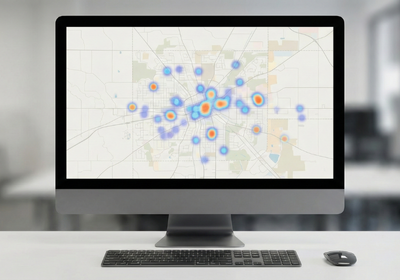
A base map serves as the canvas for your data. It provides geographic context, showing streets, boundaries, land use, and other relevant features. The right base map should:
Provide context without overshadowing the data.
Enhance the readability and interpretability of the data.
Align with your brand and the overall message.

Key Considerations for Selecting a Base Map
Data Type: Consider the type of economic data you are displaying. Are you showcasing population density, income levels, or employment rates? Different data types may require different base map styles. For instance, population density might benefit from a simple, neutral base map that allows the data to stand out, while visualizing transportation infrastructure might necessitate a more detailed map.
Target Audience: Who is your audience? Are you presenting to fellow experts, policymakers, or the general public? Tailor your base map to their level of understanding and visual preferences. A map for the general public might benefit from more intuitive and familiar cartography, while an expert audience may appreciate a more technical or detailed map.
Visual Hierarchy: Establish a clear visual hierarchy. The base map should support the data, not compete with it. Use color, contrast, and transparency to ensure that the data remains the focal point.
Aesthetic Harmony: Ensure that the base map's visual style aligns with your brand and the overall tone of your communication. A modern, data-driven company might opt for a minimalist base map, while a more traditional organization might prefer a classic cartographic style.
Types of Base Maps and Their Applications
Street Maps: Detailed road networks, ideal for visualizing location-specific data.
Topographic Maps: Show elevation changes and natural features, suitable for environmental or resource-related data.
Satellite Imagery: Provides a realistic view of the landscape, useful for land use and development analysis.
Dark/Light Canvas Maps: Simple, neutral backgrounds that allow data to stand out.
GIS Mapping System and Geographic Information Services
Flyer View Group utilizes state-of-the-art GIS mapping system and geographic information services to ensure the most accurate and visually appealing base maps for our clients. We create custom base maps tailored to the specific needs of each project, ensuring that the GIS urban planning is clear, concise, and compelling. Our expertise extends to 3D map rendering and creating interactive map for website integration, allowing users to explore your economic data in a dynamic and engaging way.
Choosing the right base map is an essential step in effectively communicating your economic data. It provides context, enhances readability, and reinforces your message. By carefully considering your data type, target audience, visual hierarchy, and aesthetic preferences, you can select a base map that elevates your data and drives informed decision-making. At Flyer View Group, we're committed to helping you tell your story through data, maps, motion, and graphics. We ensure that each project runs smoothly and on time and are organized around each client relationship, needs and expectations. Contact us today to discover how our comprehensive marketing firm can transform your data into actionable insights. Let us help you promote the economic development vitality of your community and/or projects!